
The violin, from the string or chordophone instrument family, creates sound from vibrating strings
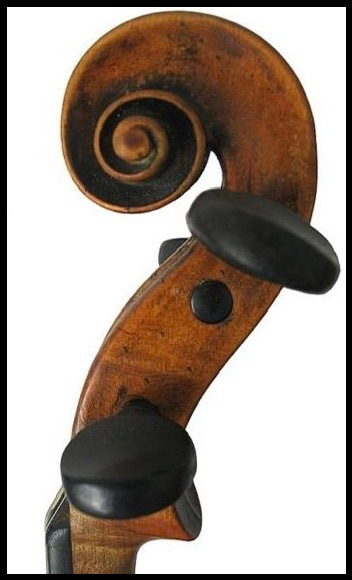
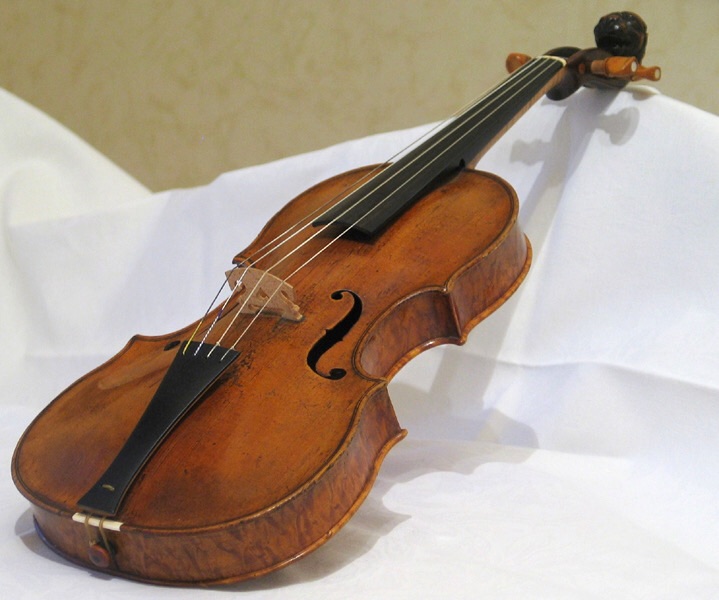
Violins may be plucked with the fingers – a technique known classically as pizzicato, bowed, and tapped or struck in other ways. Its soundbox is its hollow wooden body with 2 mirror-image ‘𝑓’ soundholes. Onto the body is fixed a fingerboard, bridge and strings, the tensions of which are adjusted via tuning pegs at the pegbox or headstock between the nut and scroll (see below). There are also fine tuners on the other side of the bridge fixed to the tailpiece for finer pitch alterations. A chin-rest and shoulder-rest are sometimes used.
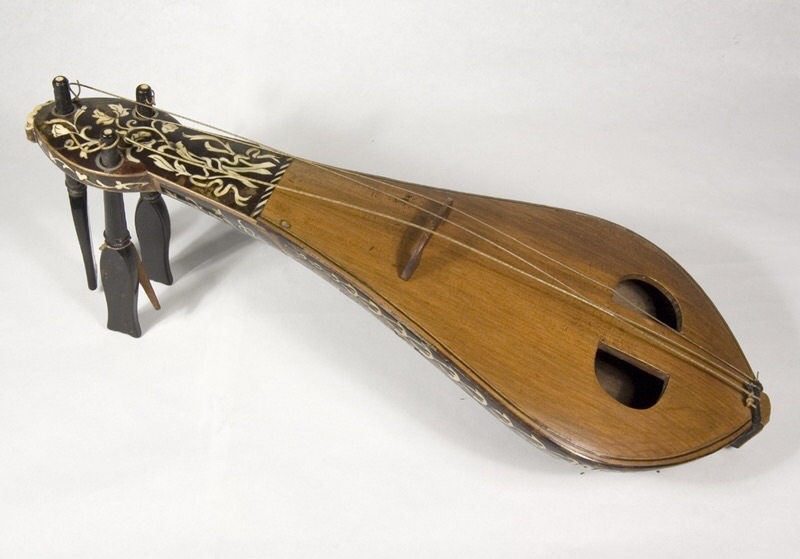
The modern, classical or acoustic violin is derived from the Baroque violin. est. 16th century Northern Italy, although modifications were made in the 18th and 19th centuries. It evolved from similar instruments: the 9th century lira, rebec, Arab rebab, French vielle, pochette, 14th century viol, Italian lira da braccio, Greek lyre…
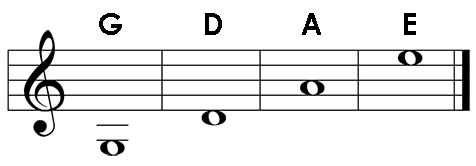
The violin is an extremely versatile instrument with a wide range of over
4 octaves and is used in a variety of traditions globally. In the West they are used classically as soloist instruments, in orchestras and quartets or small ensembles (e.g. chamber music)
The fiddle (I used interchangably with violin) is also a staple in folk musics: celtic, gypsy, country, bluegrass and jazz, as well as fusion music. On a folk fiddle the bridge is slightly flatter than the more curved Western Classical kind, which allows for more doublestops, chords and a thicker sound (emphasis on harmony) with the former and more single-string articlation on the later (emphasis on melody).
Non-Western: Indian violin, Middle-Eastern violin, Norwegian Hardanger Fiddle…
Electronica

A beginner’s guide to the
VIOLIN

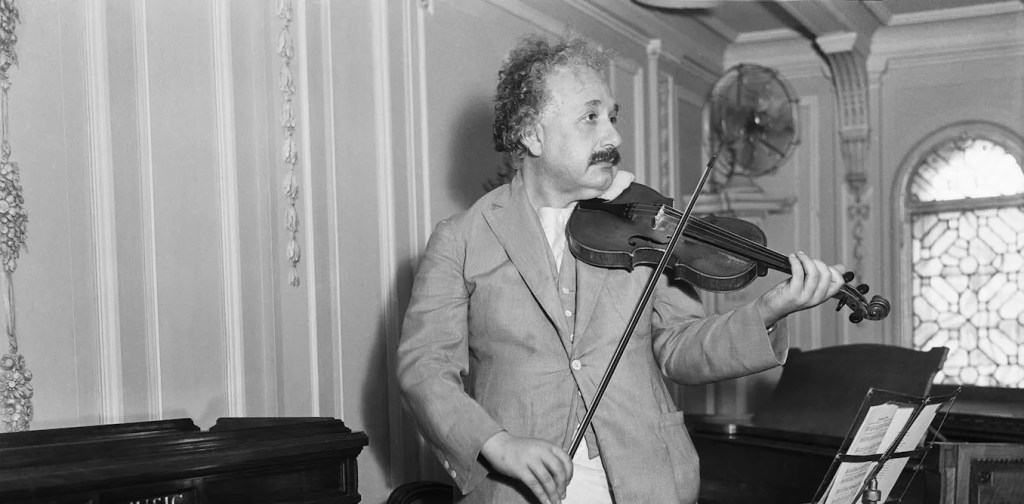
I know that the most joy in my life has come to me from my violin
Albert Einstein
Contact me for violin lessons
 Music of Movement