Pitch • Intervals • Scales • Chords • Modes • Circle of Fifths
Back to Music Theory
Chroma Wheel I: The Chromatic Scale
Picturing pitch-space

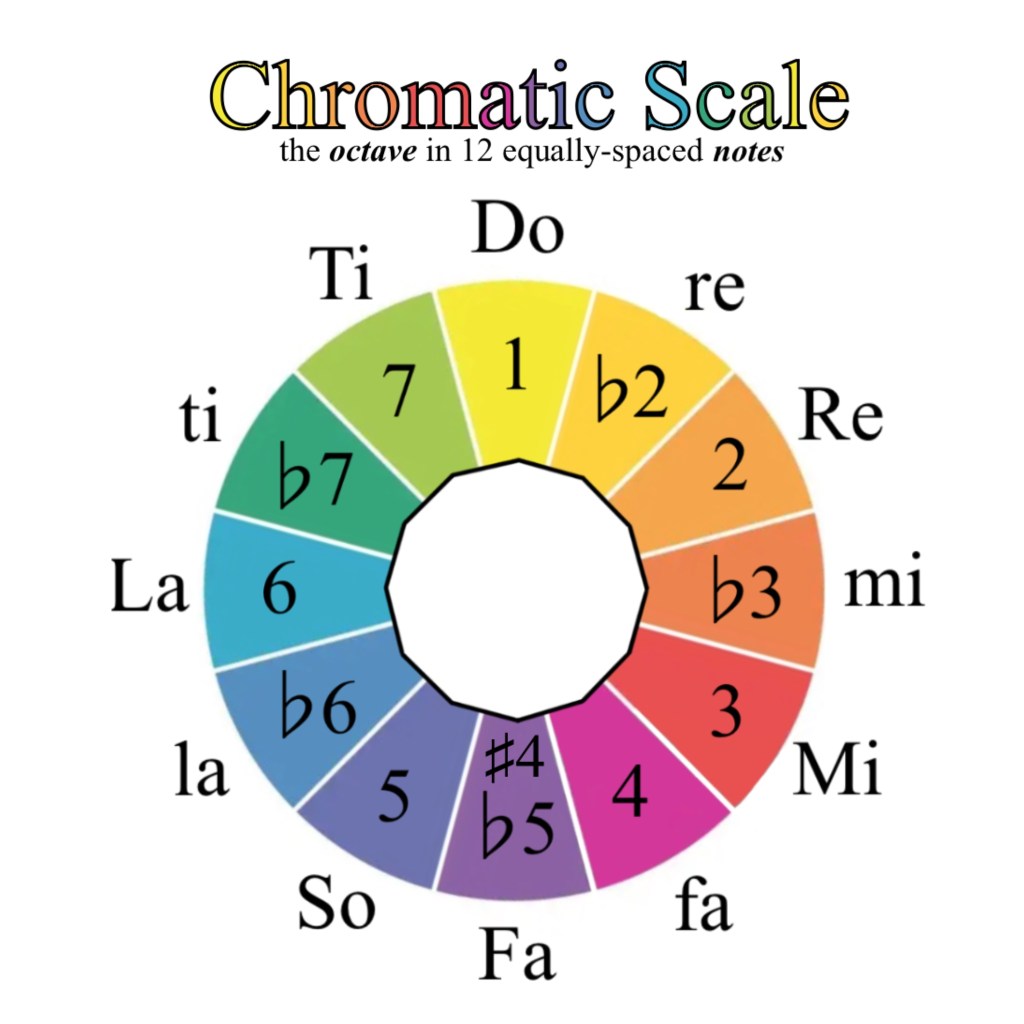
letters A-G and their flats♭/ sharps ♯ are notes that repeat every octave
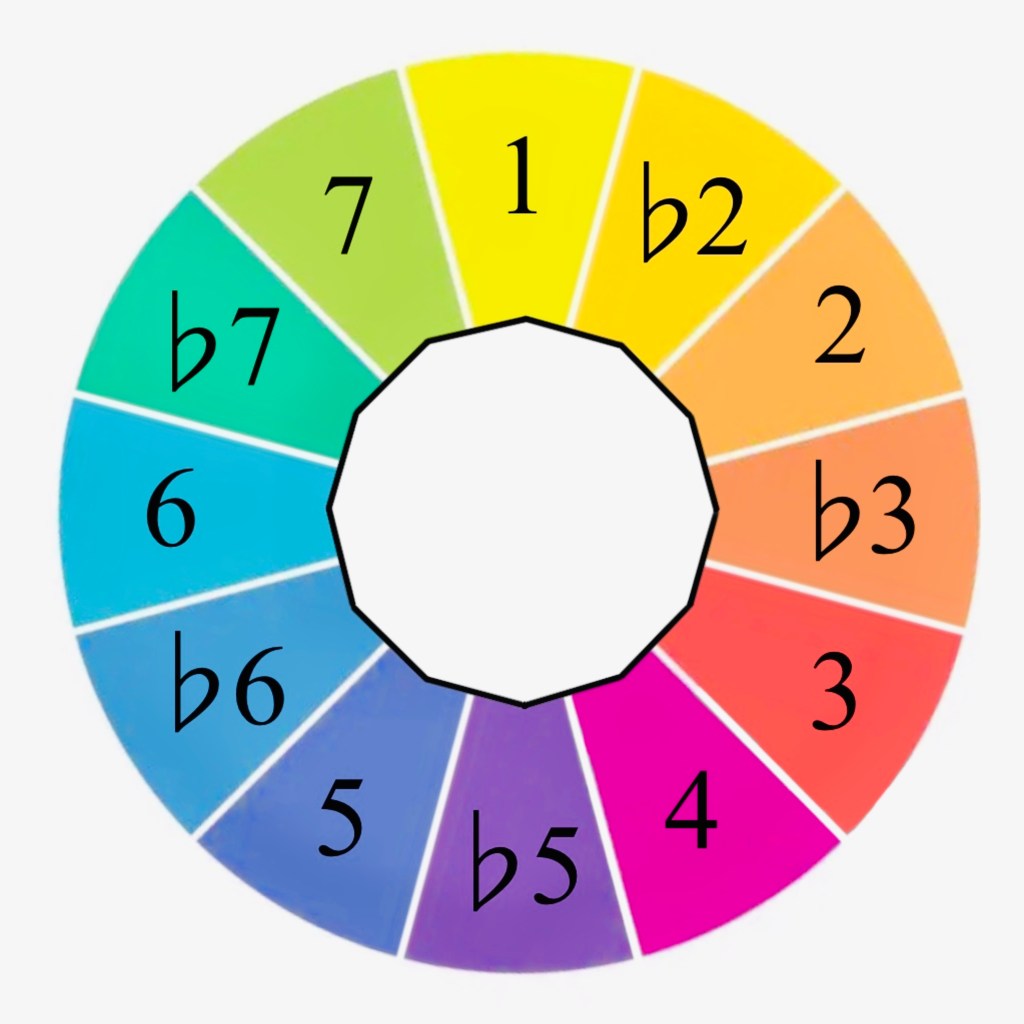
1 is always the tonic and degrees are relative to it
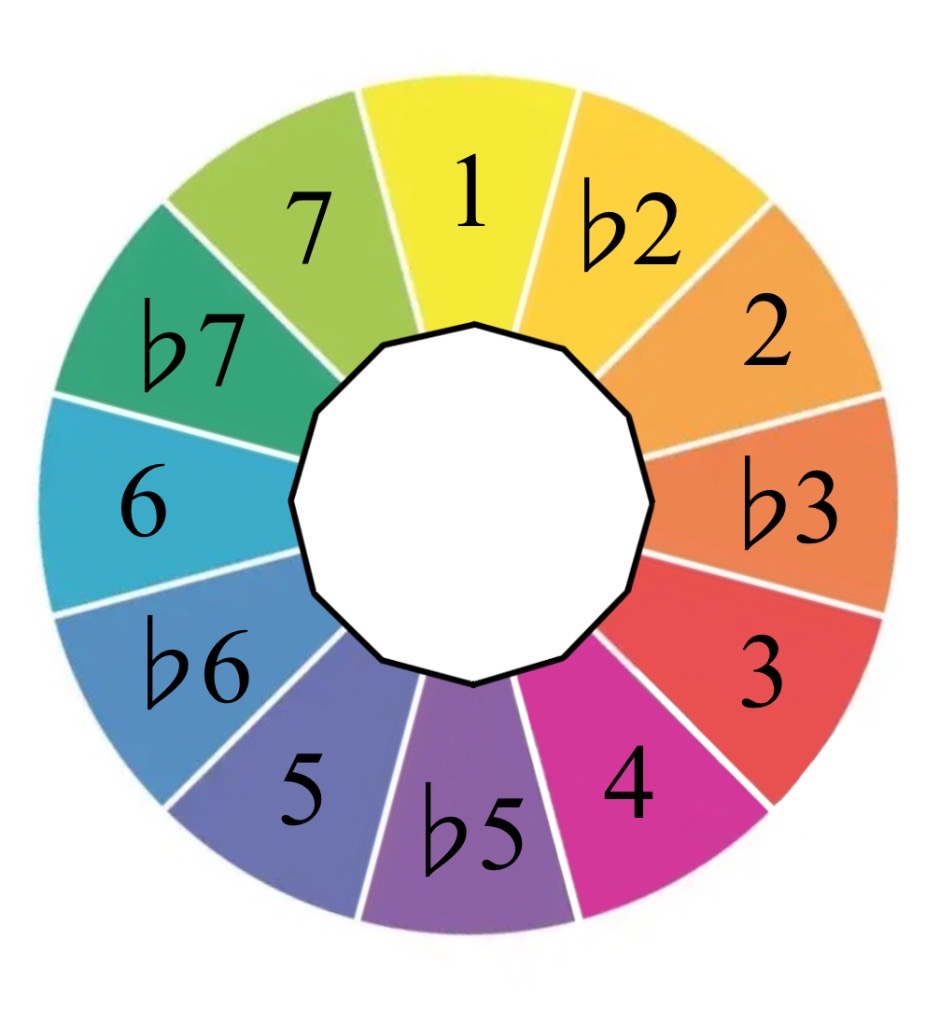
Pitch describes the frequency of tonal vibration in Hertz (cycles per second) and we perceive this as how high or low the sounds are. A in the 4th octave (above middle C) for instance vibrates at 440 oscillations per second. For context, the range of human hearing is between 20 and 20,000 Hz. The Western 12 tone equal temperament (12-TET) tuning model gives us the chromatic scale, a repeating cycle of octaves, each containing 12 tones of equal value shown on Chroma Wheel as 30° segments. 360° represents one octave. The wheel is a melodic map which models note relationships through movement in 2D space and the colour spectrum.
Chromatic scales of different octaves have the same quality except for being transposed into higher and lower registers: we perceive the same notes in different octaves as having some kind of equivalence. Moving up an octave doubles the frequency of a tone, while moving down an octave halves it. This can be seen by halving the length of a vibrating string to get a pitch an octave higher – e.g. fretting the 12th fret on a guitar. This is because the shorter the string, the higher the pitch generated.
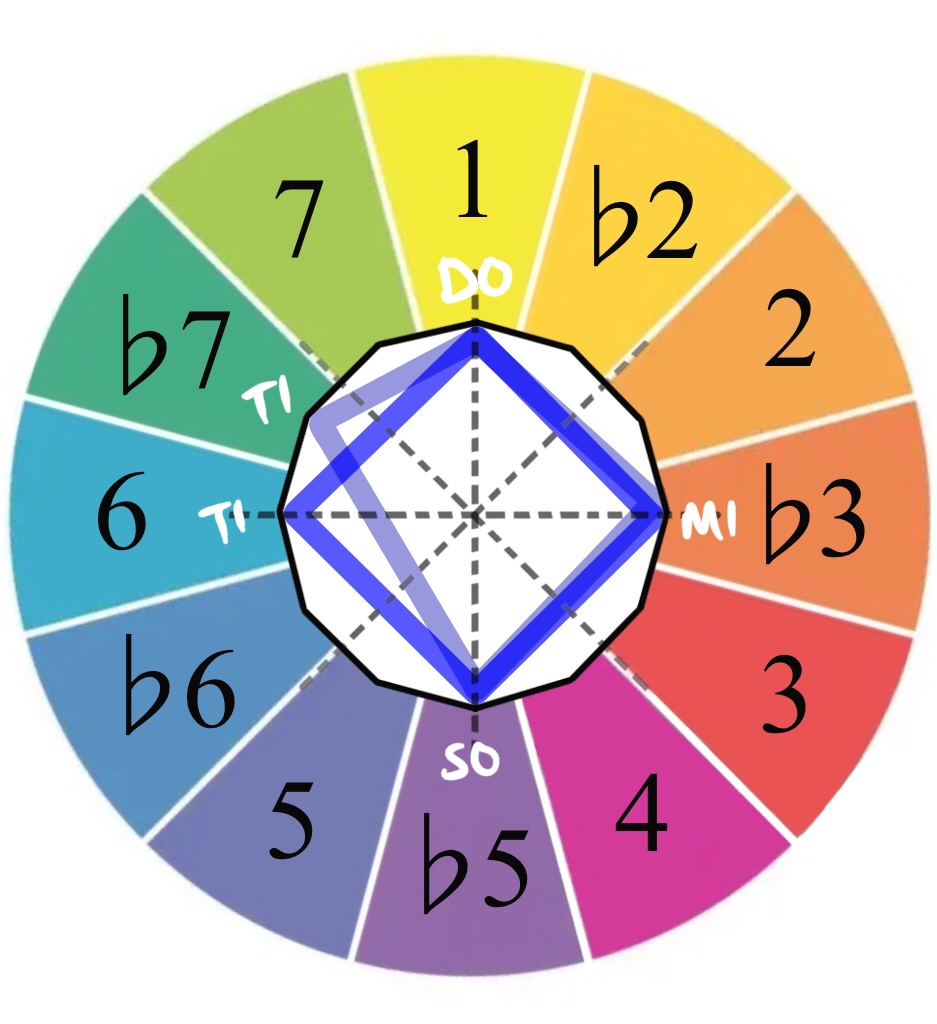
The gap between any given tones is called an interval and moving from a segment to one next to it represents a somewhat confusingly named semitone or half-step, the fundamental unit of interval (pitch-change) in this tuning system, and so the building block of melody and harmony. In the wheels above semitone intervals are shown by each side of the inner white dodecagon.
Chroma means colour and Chroma Wheel presents the spectrum of pitch as analogous to a colour scale, which shows adjacent and nearby tones to be similar in hue as they are in pitch, whereas complementary or opposite tones on the wheel can be heard as more distant in pitch and seen as contrasting in hue. Some tones when played together (chords, harmony) or sequentially (melody) will appear consonant while others will seem dissonant. Consonance isn’t objective however and depends on cultural factors.
Octaves can be divided into other fractions. Though 12 is a useful number to divide mathematically, Chroma Wheel may be adapted for, for instance, an 8-tone, 24-tone chromatic scale, or indeed any number that can be reasonably represented on a wheel.
Colours are arbitrary and are intended to show gradation of the scale. Do is movable – i.e. it can be any tone, not necessarily C. Tones and their intervals are always relative to each other. The 1, Do in solfège, Sa in sargam is the tonic or tonal key centre, the scale degree which sounds most resolved. It represents unison or octave intervals.
Consider the colours of intervals, scales, chords and melodies first, then the scale degree numbers – letters will come later.
Regular Polygons
Intervals: semitones, every note
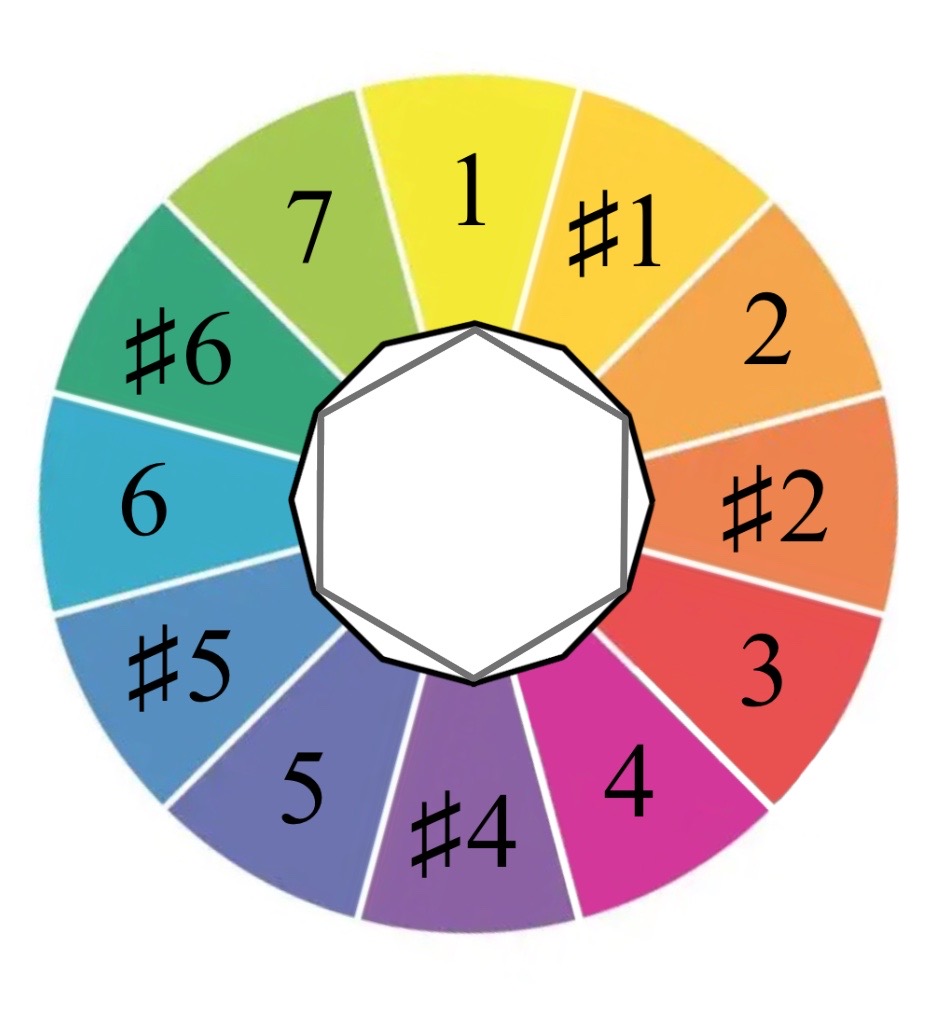
whole tones, every other note
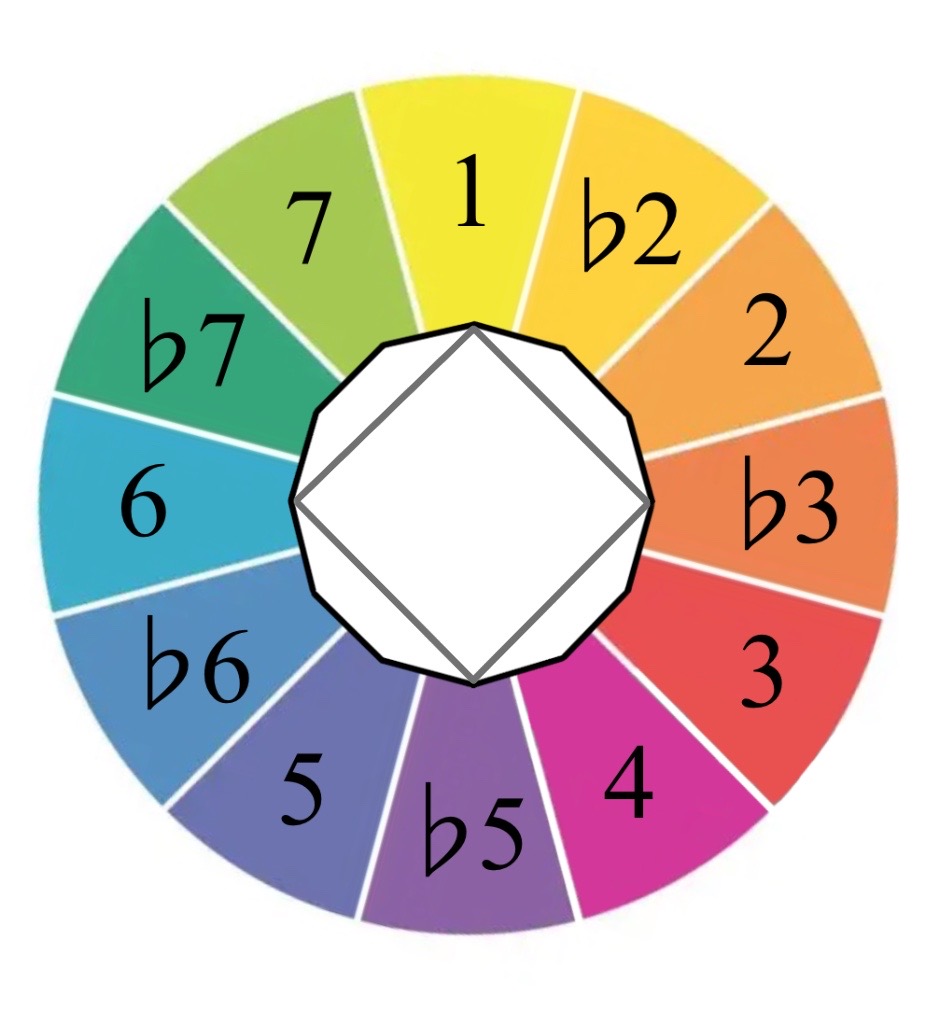
minor 3rds
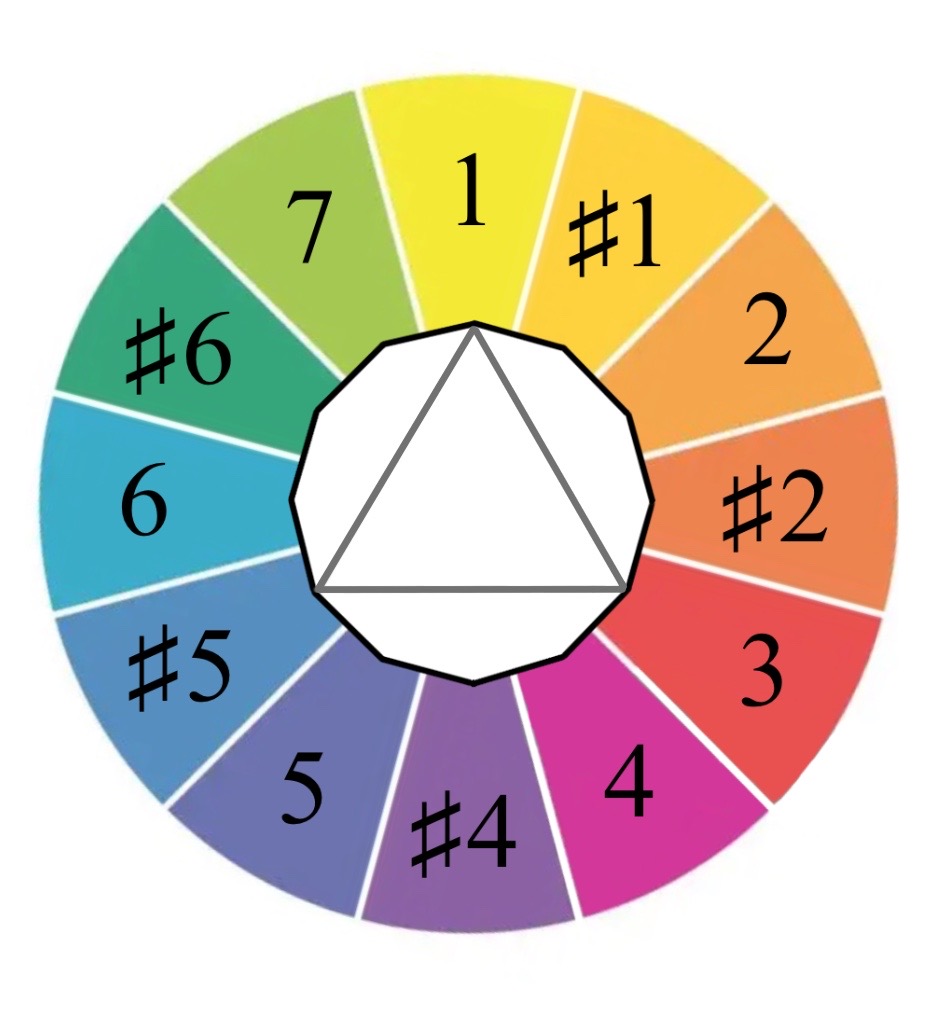
major 3rds
Irregular Polygons
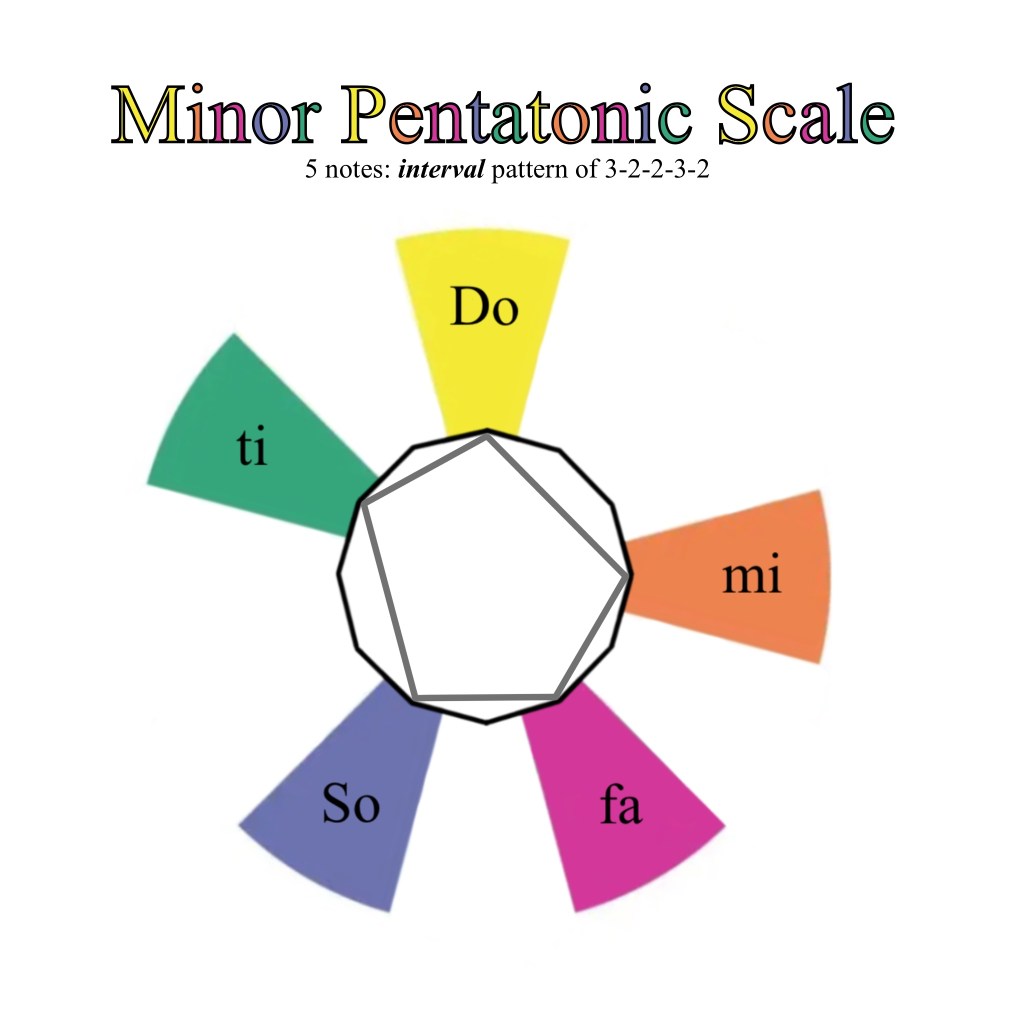
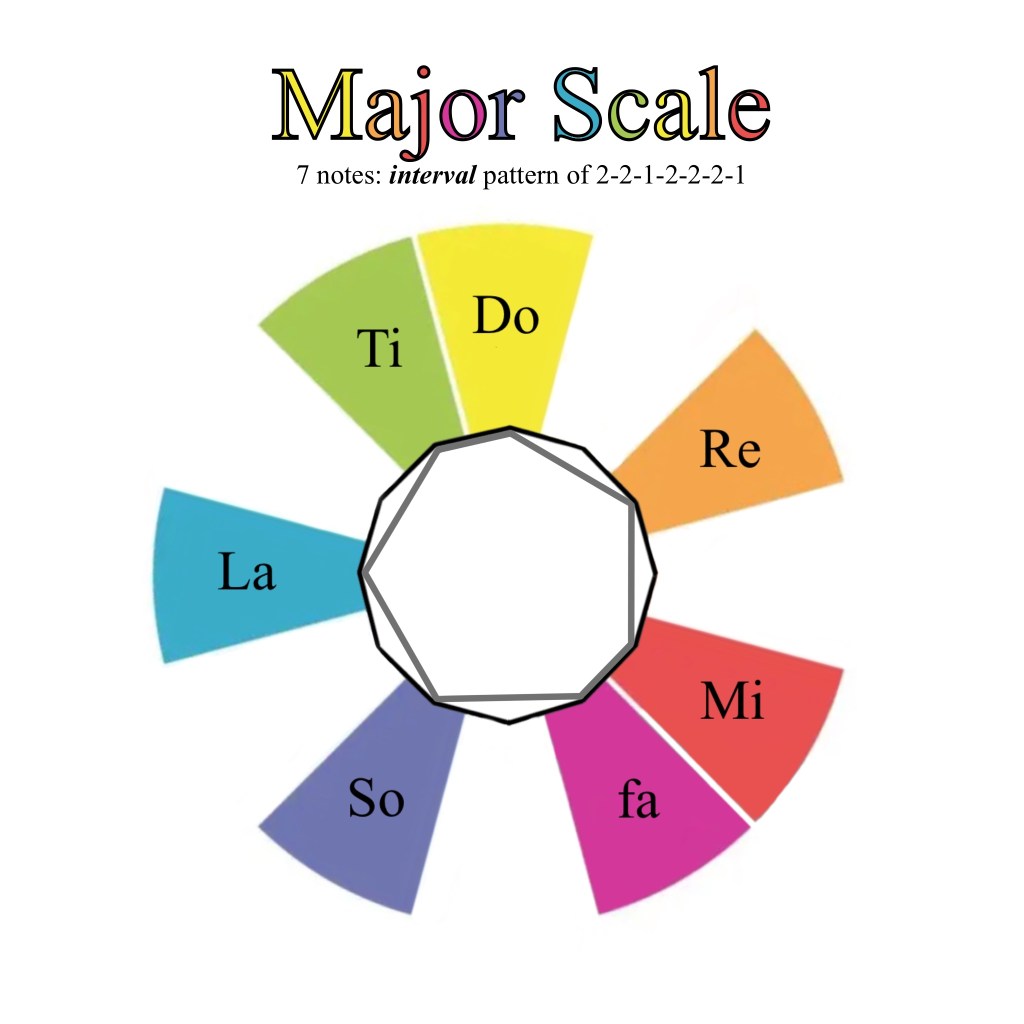
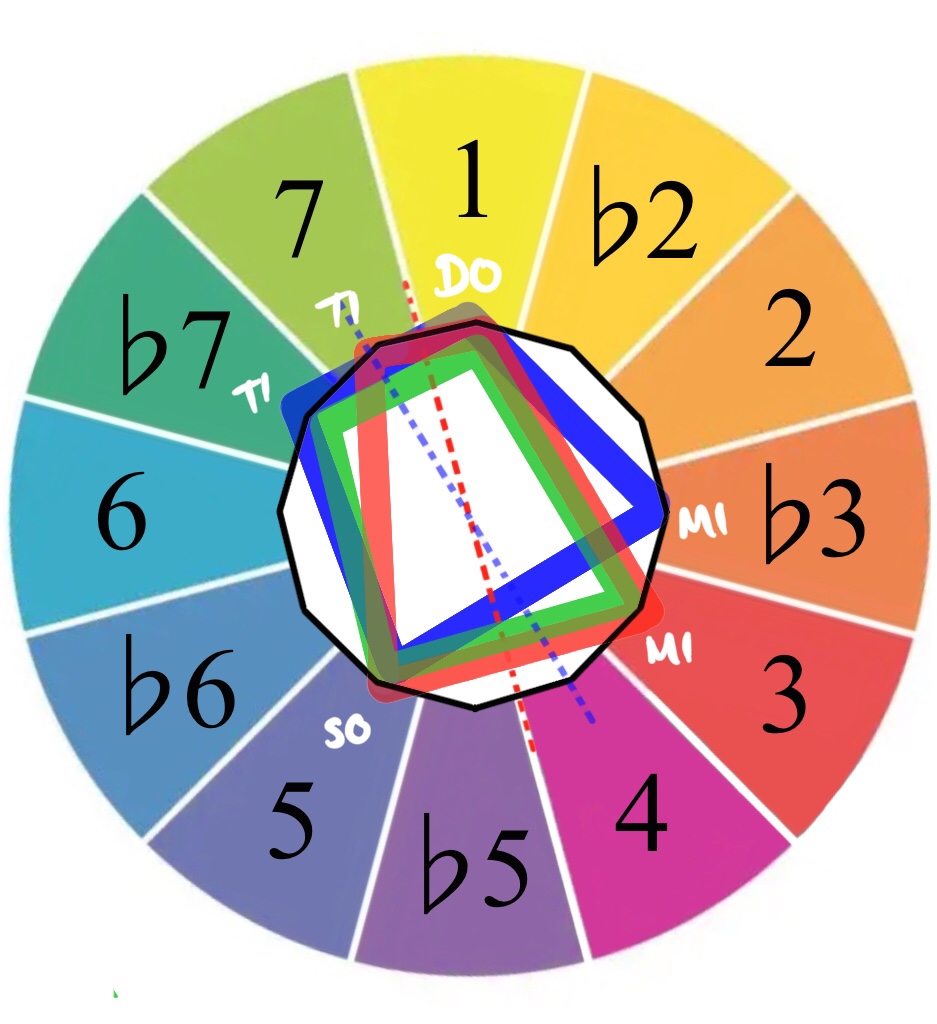
There is an axis of symmetry in both scales – can you find them?
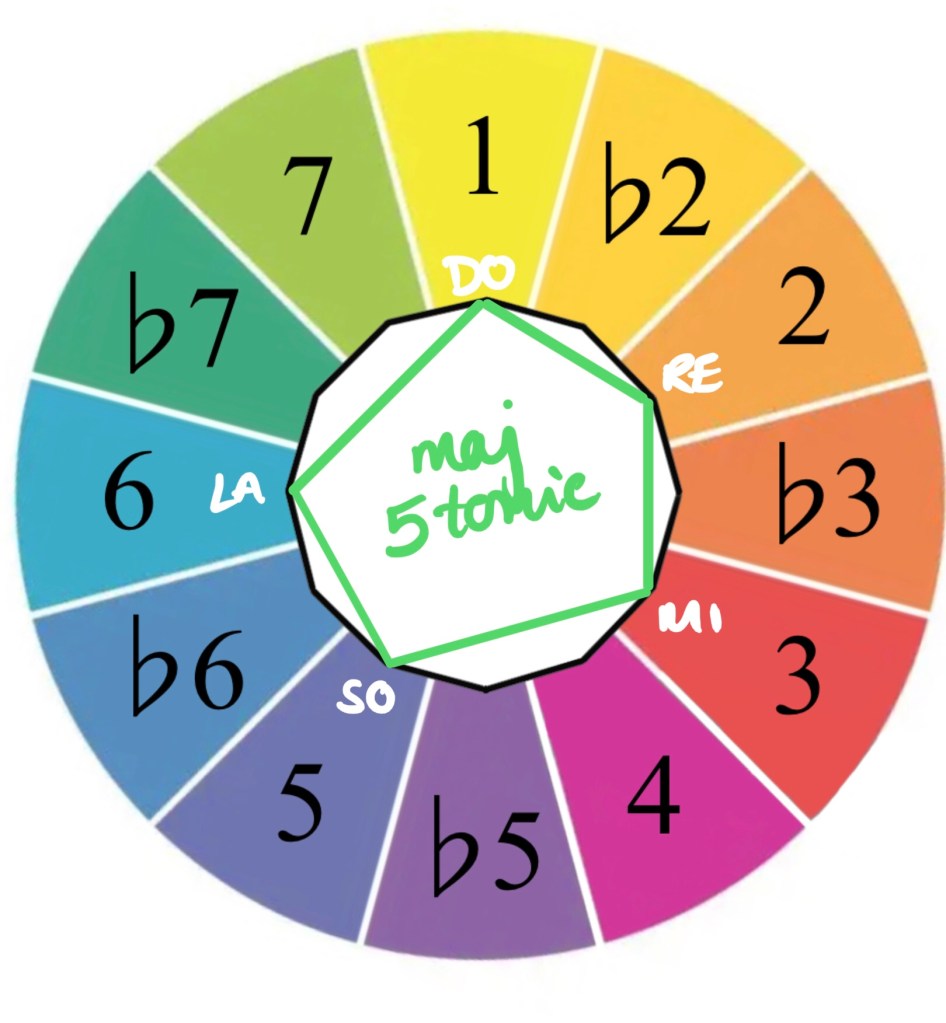


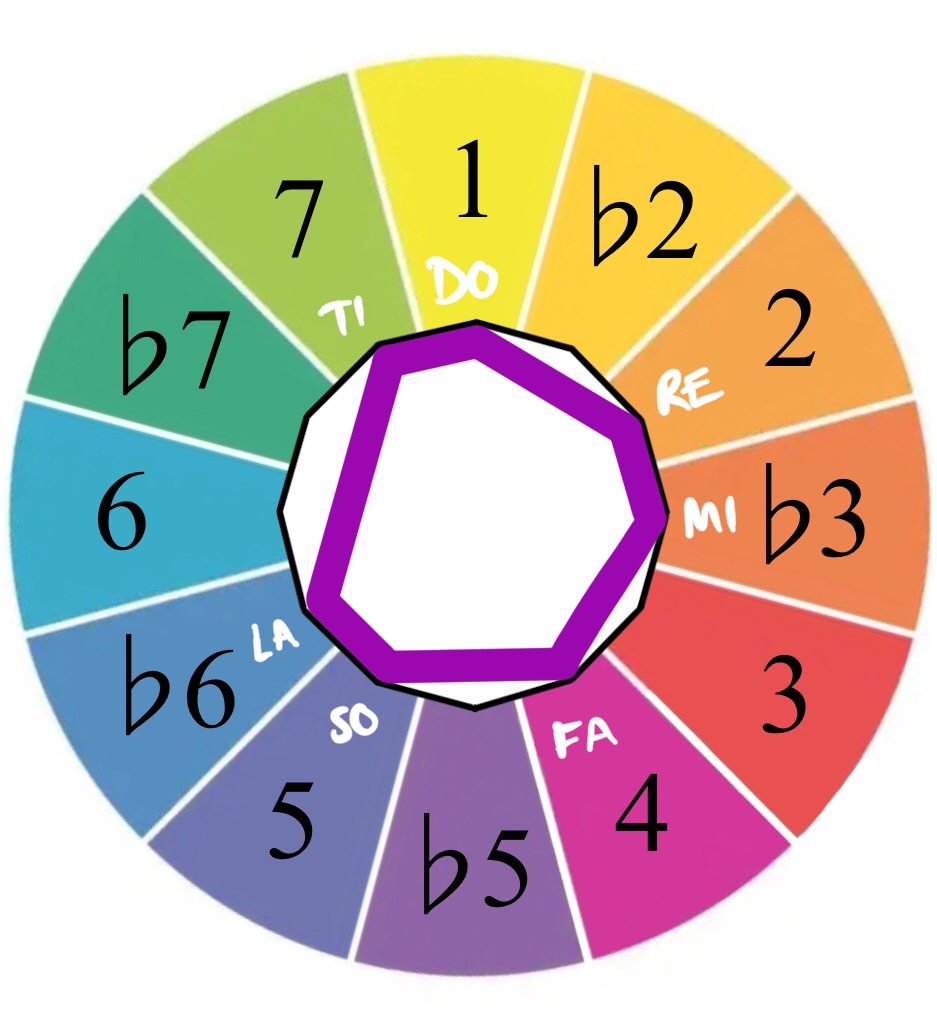

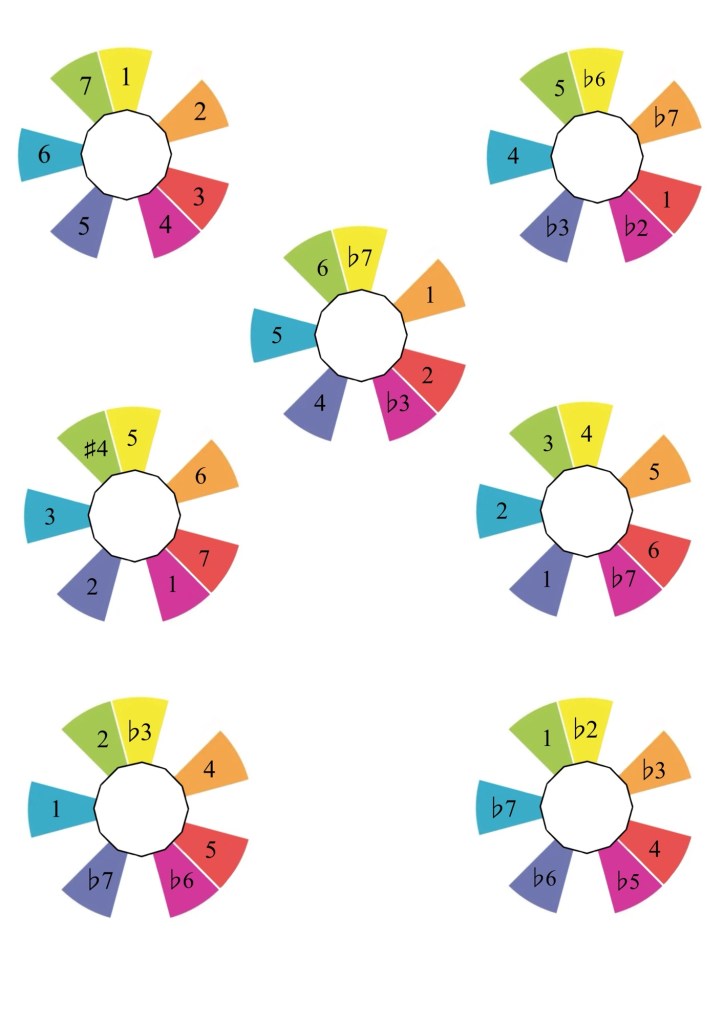
Chroma Modes
Rotating the pentatonic scale
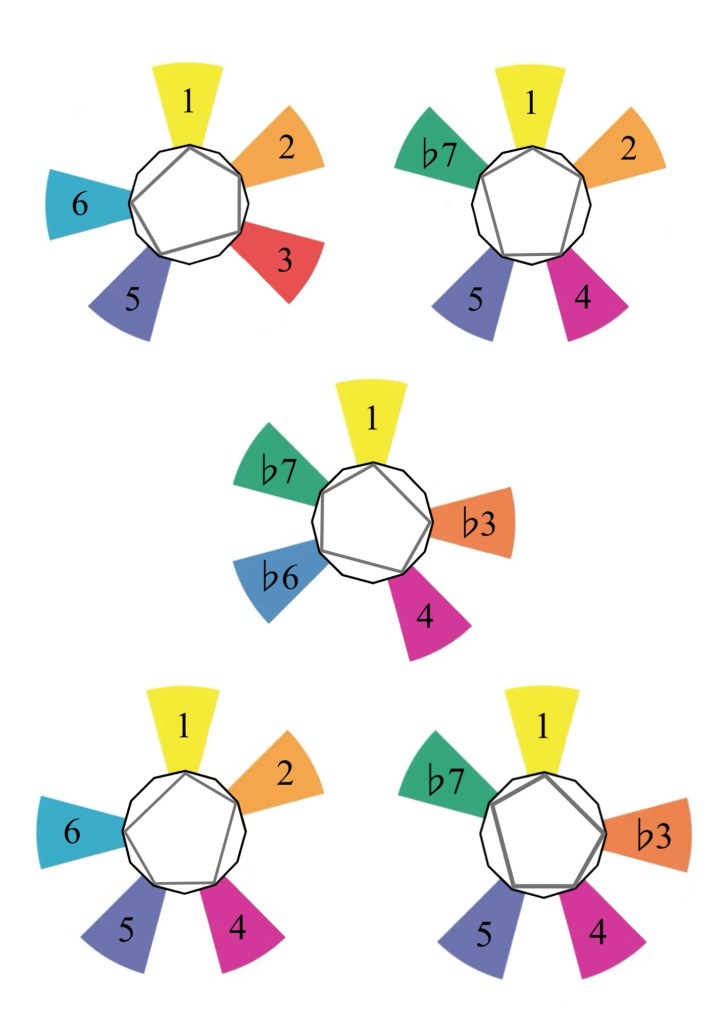
Rotating the diatonic or major scale
Chroma Phrases
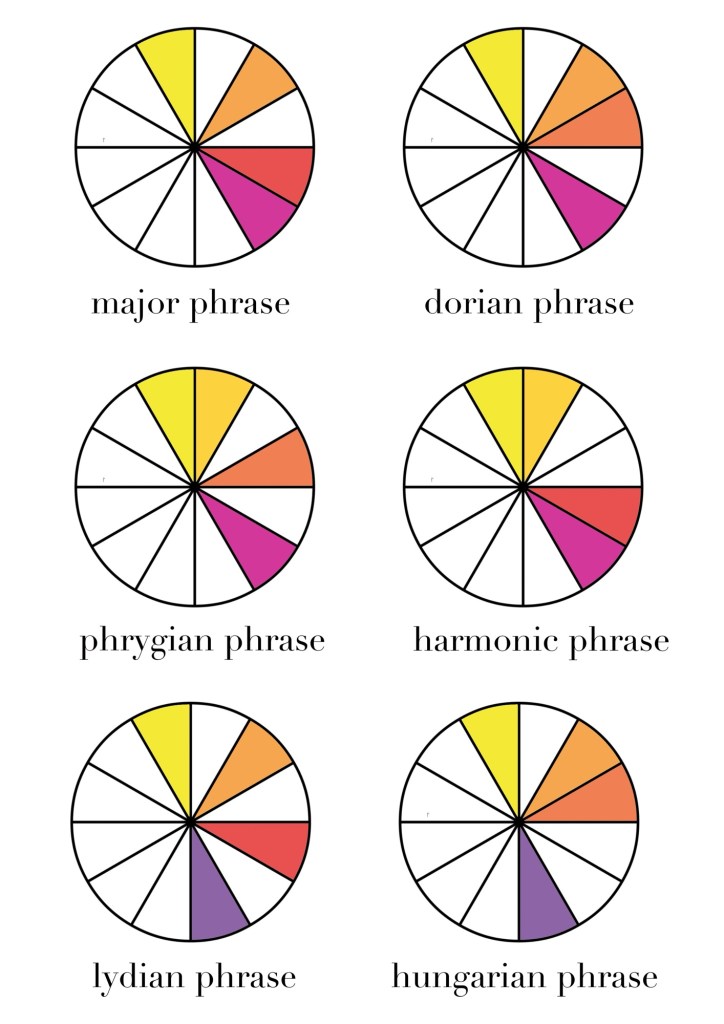
Main tetrachords or 4-note phrases
Scale degrees
Major: 1 – 2 – 3 – 4
Dorian: 1 – 2 -♭3 – 4
Phrygian: 1 -♭2 – 3 – 4
Harmonic: 1 -♭2 – 3 – 4
Lydian: 1 – 2 – 3 -♯4
Hungarian: 1 – 2 -♭3 -♯4
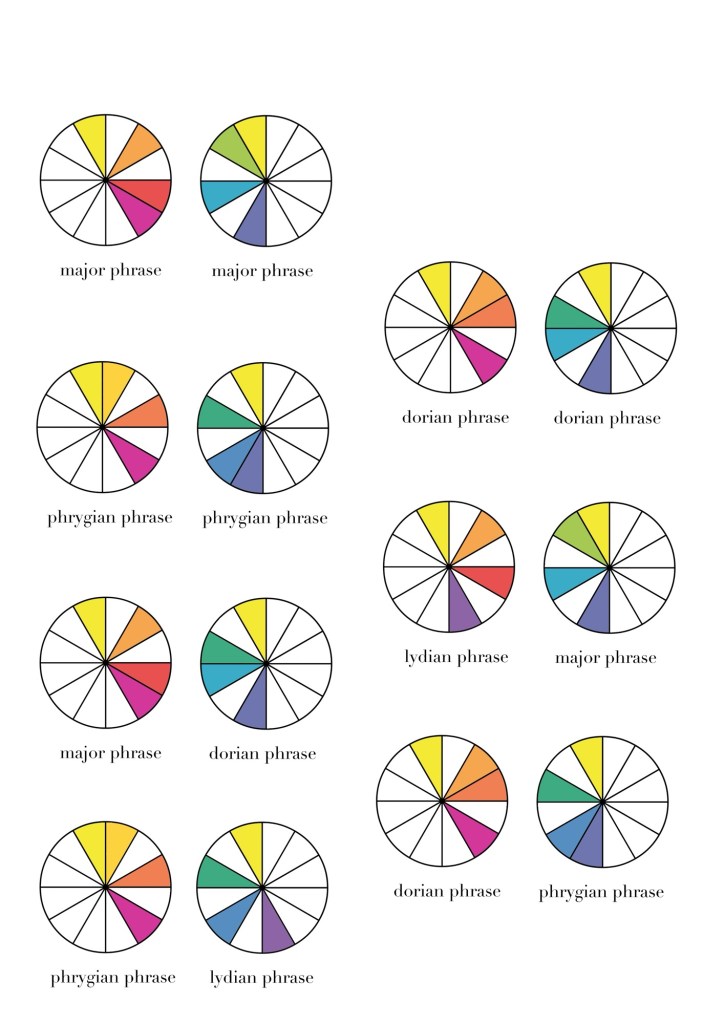
Combinations forming the 7 modes of the diatonic scale
Scale degrees
Major:
1-2-3-4-5-6-7
Dorian:
1-2-♭3-4-5-6-♭7
Phrygian:
1-♭2-♭3-4-5-♭6-♭7
Lydian:
1-2-3-♯4-5-6-7
Mixolydian: 1-2-3-4-5-6-♭7
Aeolian: 1-2-♭3-4-5-♭6-♭7
Locrian:
1-♭2-♭3-4-♭5-♭6-♭7
Chroma Wheel II: The Circle of 5ths
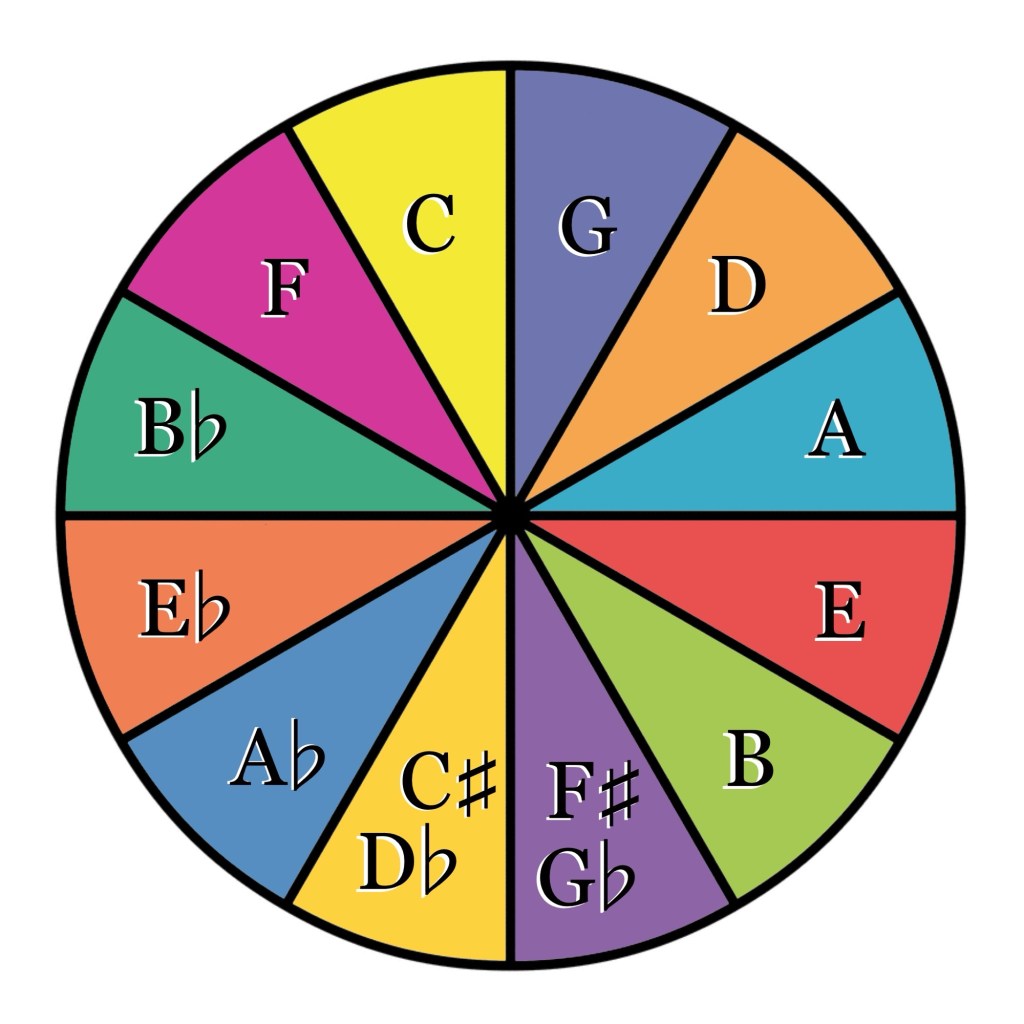
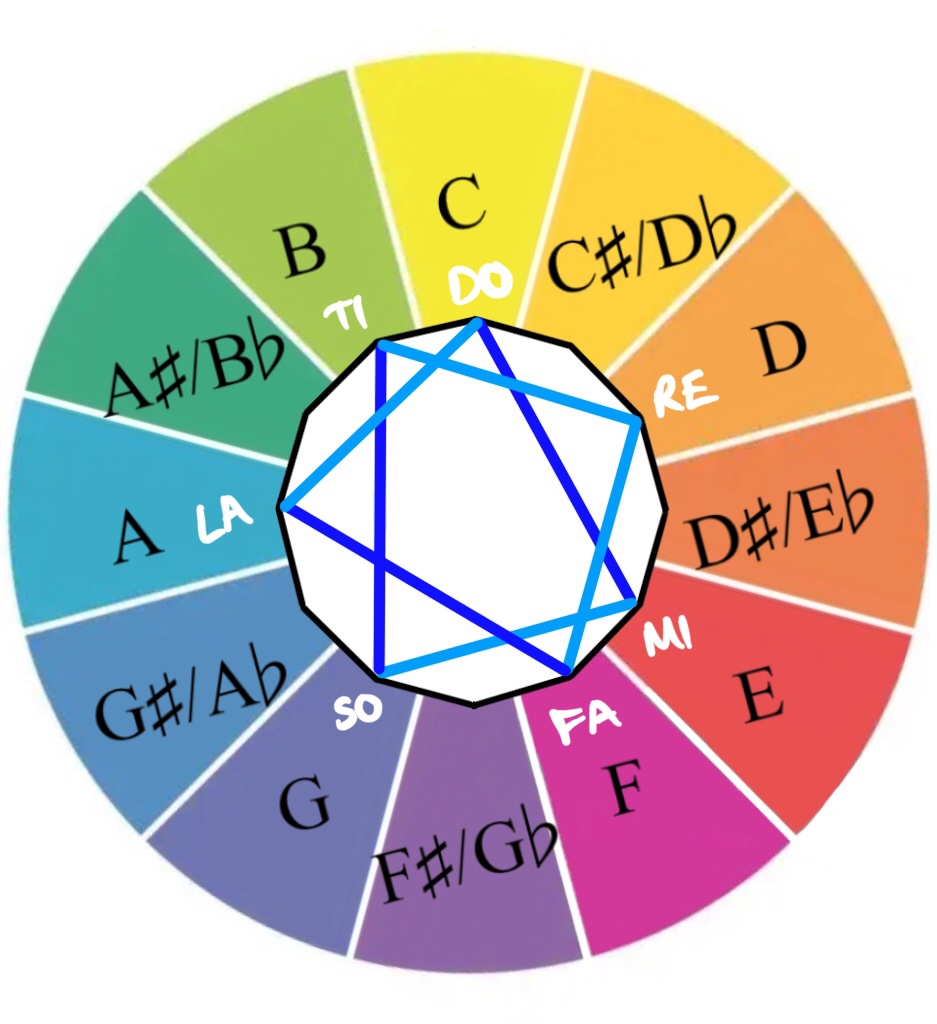
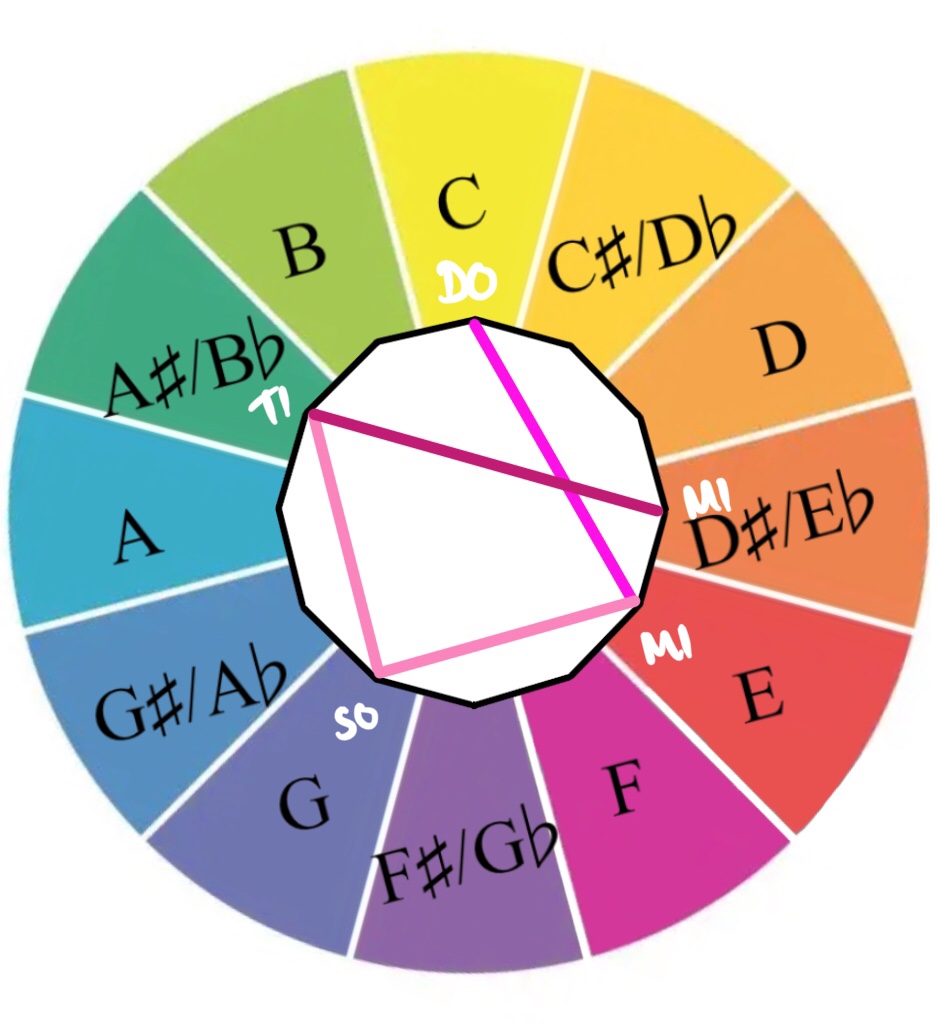
Clockwise: cycling ascending Fifths or descending Fourths
Anticlockwise: cycling ascending Fourths or descending Fifths
Comparing Chroma Wheel I & II
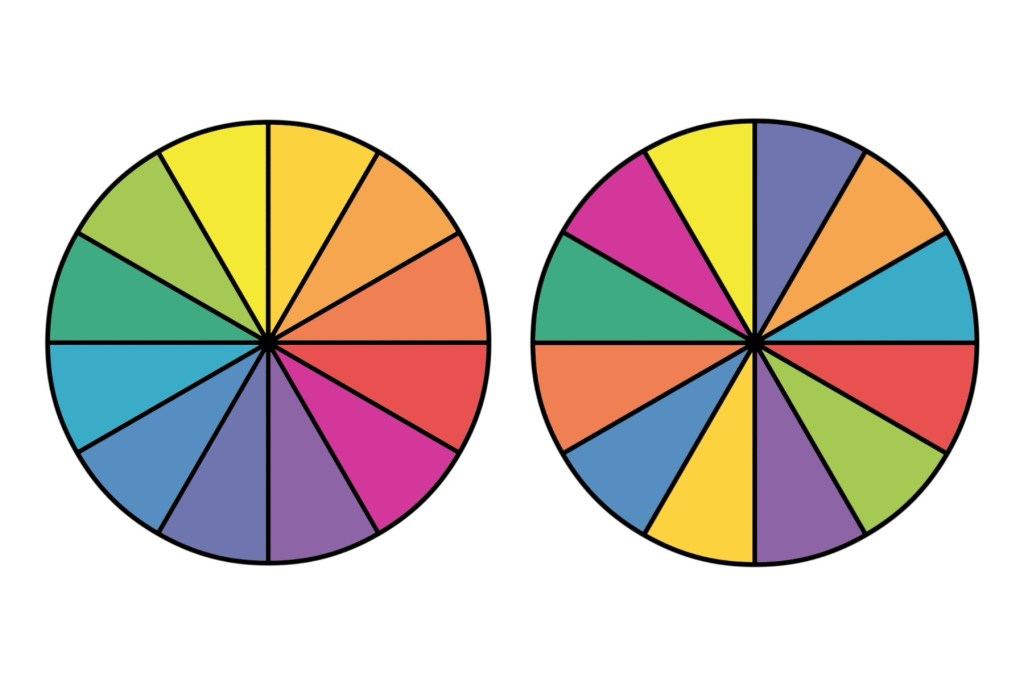
To go from Chroma wheel I to II you rotate one whole tone scale 180 degrees, i.e. a tritone, keeping the other in the same position so that every other note has been replaced by its tritone, its complementary (opposite) colour.
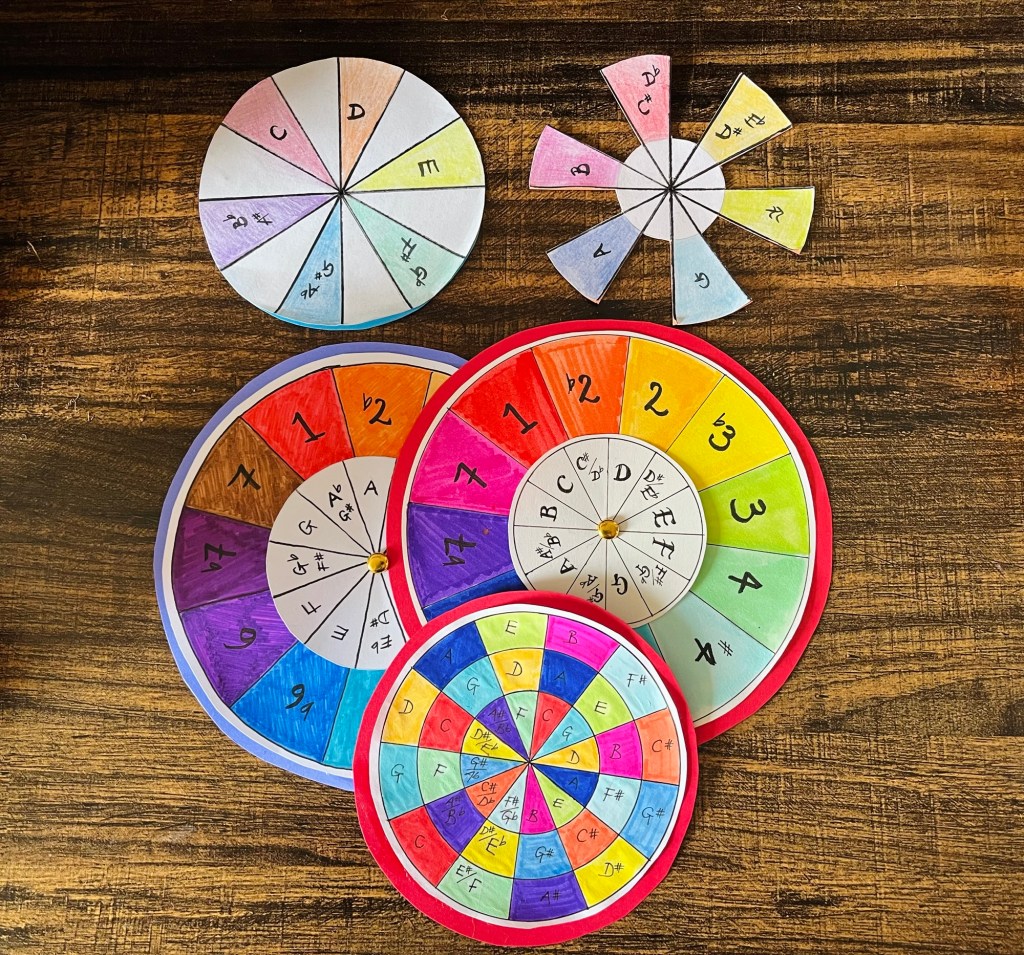
Although octaves are a natural phenomenon, which is what Chroma Wheel encapsulates, The Chromatic scale is not. It is a tuning system among many. Tuning in 5ths, called Pythagorean tuning is the original way. Being the 3rd partial of the harmonic series of notes of natural resonance, Fifths are very consonant. It is naturally harmonious.
The chromatic scale was invented as way to mitigate the problem keyboards faced with the ‘Just Intonation’ of Pythagorean tuning: scales didn’t sound the same in different keys and you can’t retune pianos on the fly.
[more info here]
So although Fifths are primary, they are shown on Chroma Wheel II because Chroma Wheel I represents not simply the 12 degrees of 12-TET but its colour gradations symbolise the spectrum of sound, pitch “space,” with octaves which as mentioned can be divided up into any number of degrees.
The circle helps us to see the cycling nature of octaves – again, the halving/ halving the frequency – and how the tones interact harmonically, bringing a certain colour palette.
Cycles of Fifths and Thirds
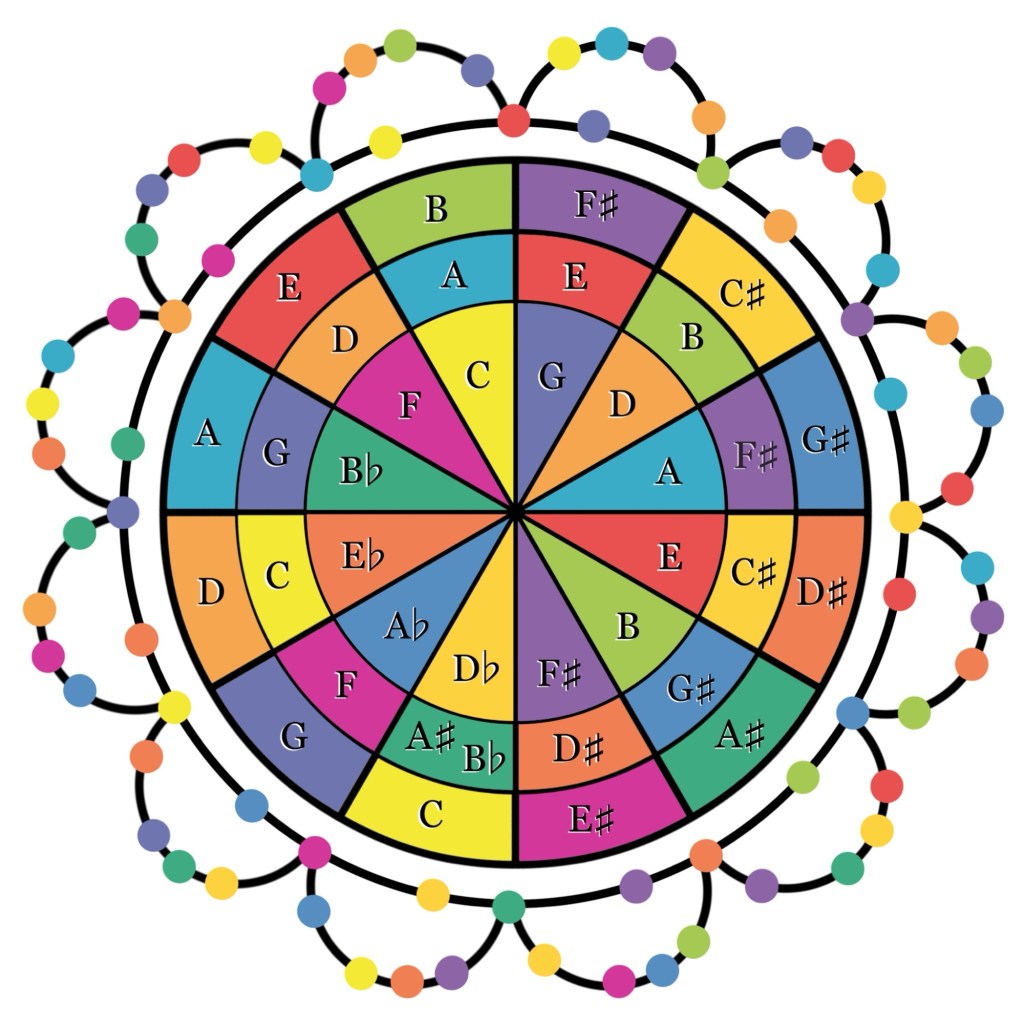
Tertiary harmony
Diatonic triads
More to come…
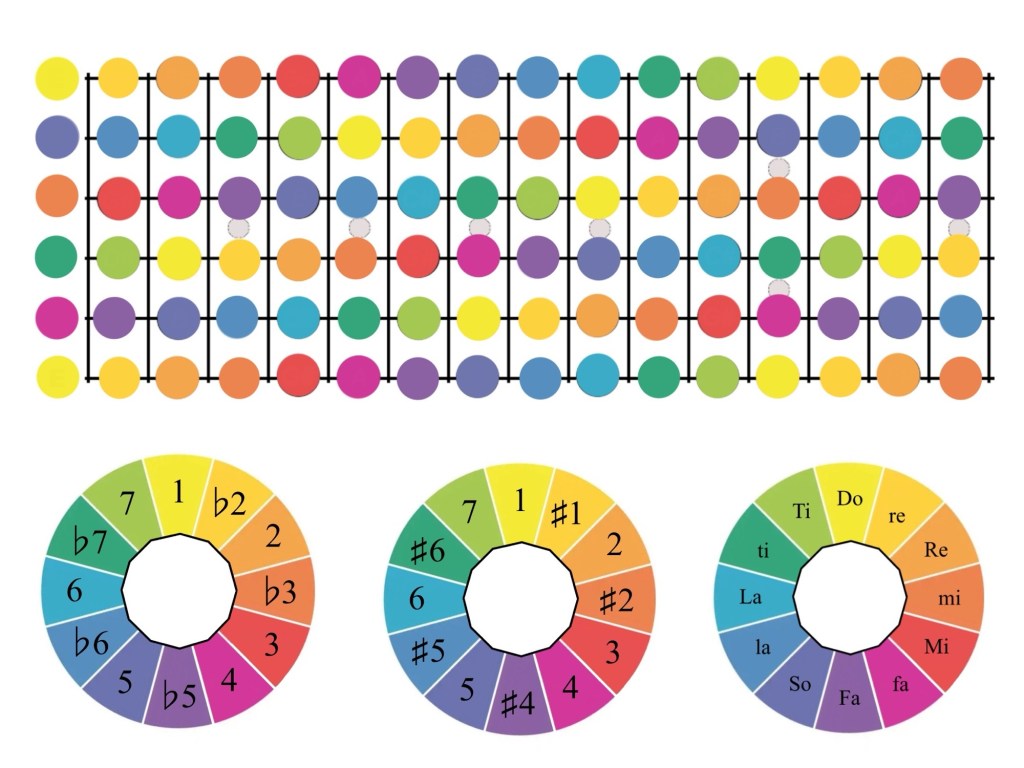
Chroma for guitar
Glossary
Modes
- Scale shape rotations
Flats ♭ and Sharps ♯
- relative to key
Equal-temperament
- vs. just intonation
What is an octave?
- Frequency – Hz
- spiral
Symmetry
- Reflectional
- Palindromic
Circle of 5ths
- triads
- 7 chords
- extended
 Music of Movement